
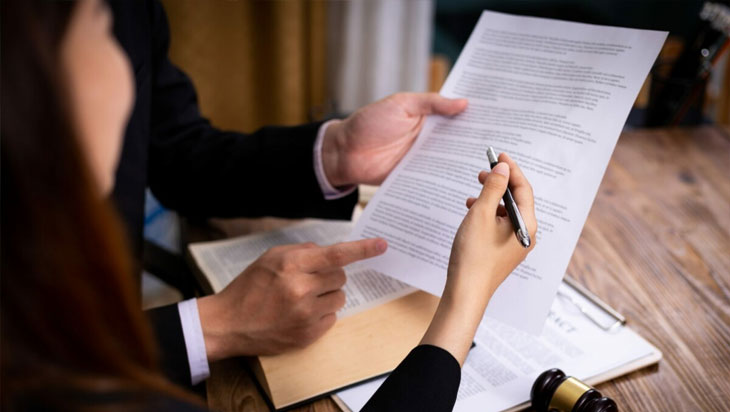
Civil disputes often arise from everyday matters such as property, money, agreements, or personal rights, but their impact can be long-lasting and deeply stressful. Unlike criminal cases, civil matters usually continue over time and require patience, careful planning, and consistent legal strategy. At Aask law firm, we bring more than 20 years of experience in civil litigation to help clients navigate such disputes with clarity, confidence, and responsible legal representation. disputes often arise from day to day dealings such as property ownership, business transactions, financial arrangements, or contractual relationships. While these matters may appear routine at first, they frequently develop into long-standing disputes that require careful legal handling and strategic planning. At Aasklawfirm, we bring more than 20 years of experience in civil litigation to help clients protect their rights and resolve disputes in a lawful and effective manner.
Civil cases demand patience, documentation, and consistency. Unlike matters that conclude quickly, civil litigation often involves multiple stages, interim reliefs, and detailed evidence. Our role is to guide clients through this process with clarity, preparation, and responsible legal representation, keeping their long-term interests in focus.
We represent clients before Delhi Courts, including Rohini Court and Tis Hazari Courts, as well as before the High Court of Delhi. Our long-standing practice across these courts allows us to handle civil matters with a clear understanding of procedure, timelines, and practical courtroom realities.
Civil litigation demands a thoughtful and balanced approach. With more than two decades of experience, we understand that every civil dispute has its own background, documents, and legal challenges. Our work begins with a detailed review of facts, agreements, correspondence, and relevant records. We carefully assess the strengths and weaknesses of the case and advise clients in clear terms about the legal position and available remedies. We focus on realistic solutions. Wherever possible, we guide clients toward legally sound and practical outcomes rather than unnecessary or prolonged litigation.
Civil Matters We Handle At Aask law firm, we handle a wide range of civil matters including property disputes, recovery suits, injunction matters, contractual disputes, partition cases, and other civil litigation arising between individuals or entities. We also assist in matters involving execution of decrees, interim reliefs, and appellate proceedings in civil cases.
Each matter is handled with due care, proper documentation, and focused legal preparation, keeping the client’s interest and long-term implications in mind.
Civil law is closely linked with legal rights, obligations, and enforcement of remedies. A well-prepared civil case depends heavily on documents, pleadings, and procedural compliance. With experience, we pay close attention to legal details, limitation periods, and procedural requirements to ensure that the case is presented effectively before the court.
Our representation aims to protect our clients’ lawful rights while ensuring that proceedings move forward in an organized and legally correct manner.
Clear Communication and Client Understanding
Civil disputes can be time-consuming, and uncertainty often adds to a client’s stress. We believe that clients should always have a clear understanding of their case. We keep our clients informed about developments, hearing dates, and procedural steps, and explain legal issues in simple language so that decisions can be taken with confidence.
Transparency and regular communication form an essential part of our civil law practice.
Civil litigation requires consistency, preparation, and professional discipline. At Aask law firm, every civil matter is handled with seriousness, confidentiality, and focused attention. With more than two decades of legal experience, we recognize that civil disputes often involve personal, financial, or property interests that deserve careful and responsible handling. Each case is approached with honest legal effort and long-term perspective, keeping both immediate relief and final resolution in view.
Our civil law practice covers a wide range of disputes, including property matters, recovery suits, injunction cases, contractual disputes, execution proceedings, commercial suits, and other civil litigation. Each matter is handled with a structured approach, beginning with a detailed review of documents, facts, and legal provisions.
We pay close attention to limitation periods, documentation, and procedural compliance, as these aspects often determine the strength and outcome of a civil case. Clients are advised honestly about the merits of their case, the possible risks involved, and the remedies available under law.
Property disputes often involve ownership, possession, family arrangements, or boundary issues and can carry emotional as well as financial implications. With many years of experience, we handle property disputes with careful legal analysis and a long-term perspective. Title documents, agreements, revenue records, and possession history are examined in detail to ensure that the client’s rights are properly asserted before the court.
Recovery suits, commercial disputes, and contractual matters require strong documentation and precise legal strategy. We assist clients in disputes arising from unpaid dues, business transactions, breach of agreements, and commercial obligations. Our experience helps in identifying the most effective legal remedy, whether through civil recovery, commercial suits, or other appropriate proceedings.
Special emphasis is placed on proper pleadings, evidence, and procedural compliance to strengthen the client’s position before the court.
In many civil disputes, immediate protection of rights is essential. Injunction matters require urgency, accuracy, and strong legal grounds. We assist clients in seeking temporary and permanent injunctions to prevent unlawful interference, dispossession, or damage to legal rights. With decades of experience, we understand the importance of timely and well-prepared applications in such cases.
Obtaining a favourable judgment is only one part of civil litigation. Execution of decrees is equally important. We assist clients in execution proceedings to ensure that court orders are implemented effectively and lawfully. Execution matters are handled with diligence and persistence, keeping client interests protected at every stage.
Below is original, plagiarism-free website content explaining civil case keywords, written in a clear, natural, professional tone. You can use this directly on a law firm website. I have also listed all major civil case related keywords and explained each one in simple language, so it helps both readers and SEO.
Civil Case Matters – Complete Guide
A civil case is a legal dispute between two or more parties where the relief sought is usually compensation, recovery of money, possession of property, enforcement of rights, or injunctions. Unlike criminal cases, civil cases do not involve punishment like jail. The focus is on protecting legal rights and resolving private disputes through courts.
Civil litigation covers a wide range of matters such as property disputes, recovery suits, contract breaches, family property issues, landlord-tenant disputes, injunction cases, and declaration suits. A properly drafted civil case and strong legal representation play a crucial role in achieving a favourable outcome.
1. Civil Case : A civil case is a dispute related to private rights and obligations. It may involve property, money, contracts, or personal rights. The objective is resolution, compensation, or enforcement of legal rights.
2. Civil Suit : A civil suit is the formal legal proceeding filed before a civil court by a plaintiff against a defendant seeking relief such as recovery, injunction, or declaration.
3. Plaintiff : The plaintiff is the person who files the civil case. The plaintiff claims that their legal rights have been violated and seeks relief from the court.
4. Defendant : The defendant is the person against whom the civil suit is filed. The defendant is required to respond to the allegations made by the plaintiff.
5. Cause of Action : Cause of action refers to the facts and events that give rise to the right to file a civil case. Without a valid cause of action, a civil suit cannot be maintained.
6. Jurisdiction : Jurisdiction means the authority of a court to hear and decide a civil case. It may be territorial, pecuniary, or subject-matter jurisdiction.
7. Civil Court : A civil court is a court that deals with non-criminal disputes such as property cases, recovery suits, contract disputes, and injunction matters.
8. Recovery Suit : A recovery suit is filed to recover money legally due from another party. This includes unpaid loans, business dues, or contractual payments.
9. Property Dispute : A property dispute arises over ownership, possession, title, or partition of immovable property such as land, house, or commercial premises.
10. Injunction Suit : An injunction suit is filed to restrain a person from doing a particular act or to compel them to do a lawful act. It can be temporary or permanent.
11. Temporary Injunction : A temporary injunction is an interim order passed during the pendency of a civil case to maintain status quo and prevent irreparable harm.
12. Permanent Injunction : A permanent injunction is a final order passed by the court after full trial, permanently restraining a party from acting unlawfully.
13. Declaration Suit : A declaration suit is filed to obtain a legal declaration of rights, status, or title, such as ownership of property or validity of a document.
14. Possession Suit : A possession suit is filed by the lawful owner to recover possession of property from an illegal occupant or trespasser.
15. Partition Suit : A partition suit is filed to divide joint family or jointly owned property among co-owners according to their legal shares.
16. Specific Performance : A suit for specific performance is filed to enforce a contract, especially in property sale agreements, where one party refuses to perform their obligation.
17. Breach of Contract : Breach of contract occurs when one party fails to fulfil the terms of a legally binding agreement, giving rise to a civil claim for damages or enforcement.
18. Damages : Damages refer to monetary compensation claimed by a party for loss or injury suffered due to the wrongful act of another party.
19. Court Fees : Court fees are mandatory charges paid while filing a civil suit, calculated based on the value and nature of the claim.
20. Written Statement : A written statement is the formal reply filed by the defendant responding to the allegations made in the plaint.
21. Plaint : A plaint is the written document filed by the plaintiff containing facts, cause of action, relief sought, and legal grounds.
22. Evidence : Evidence includes documents, witness statements, and material presented before the court to prove or disprove facts in a civil case.
23. Affidavit : An affidavit is a sworn written statement filed before the court, affirming facts under oath.
24. Limitation Period : The limitation period is the time limit within which a civil suit must be filed. Filing beyond this period may result in dismissal.
25. Decree : A decree is the formal judgment passed by a civil court determining the rights of parties in a civil suit.
26. Execution of Decree : Execution refers to the legal process of enforcing a civil court decree when the losing party does not comply voluntarily.
27. Appeal : An appeal is filed before a higher court challenging the judgment or decree passed by a lower civil court.
28. Settlement : Settlement is an amicable resolution of a civil dispute outside or during court proceedings, saving time and cost.
29. Mediation : Mediation is an alternative dispute resolution method where a neutral third party helps resolve civil disputes without lengthy litigation.
30. Civil Lawyer : A civil lawyer represents parties in civil disputes, drafts pleadings, argues cases, and provides legal advice in civil matters.
Important Civil Case Keywords
*Civil court case, Filing civil suit, Civil case procedure, Civil case appeal, Execution of decree lawyer
Civil cases involve technical procedures, strict timelines, and detailed documentation. A skilled civil lawyer ensures proper drafting, timely filings, effective arguments, and protection of legal rights throughout the litigation process.
Not every dispute needs to go directly to court. With more than 20 years of experience, we also provide pre-litigation legal guidance, including legal notices, replies, and strategic advice. Proper pre-litigation steps often help in resolving disputes early or strengthening the case if litigation becomes unavoidable.
Civil disputes can be time-consuming and mentally exhausting. We believe that clients should always understand the status of their case. We keep our clients informed about developments, hearing dates, and legal options in clear and simple language. Transparency and communication are treated as an essential part of our legal service.
At Aasklawfirm, every civil matter is handled with seriousness, confidentiality, and focused attention. With more than two decades of legal experience, we understand that civil disputes often involve personal, financial, or commercial interests that deserve careful and responsible handling. Each case is approached with honest legal effort and thorough preparation.
If you are facing a civil dispute or require legal advice regarding property, recovery, or contractual matters in Delhi, timely consultation can help in understanding your legal position and planning the correct course of action.
You may contact Aasklawfirm for a confidential consultation and legal representation before Delhi Courts, Rohini Court, Tis Hazari Courts, and the High Court of Delhi.
Divorce is not just a legal process. It is an emotional and personal decision that affects your future, family, and peace of mind. Whether the marriage has broken down due to incompatibility, cruelty, desertion, or mutual differences, it is important to handle the matter carefully and lawfully. We provide clear, practical legal support in divorce matters, keeping your rights, dignity, and long-term interests in focus.
Mutual Consent Divorce : When both spouses agree to dissolve the marriage amicably, we assist in drafting petitions, settlement terms, and ensuring a smooth and timely conclusion of the case.
Contested Divorce : In situations involving cruelty, adultery, desertion, mental harassment, or false allegations, we represent clients before Family Courts with a strong legal strategy and detailed case preparation.
Divorce under Hindu Marriage Act, Muslim Law, Christian Law, and Special Marriage Act : We handle divorce matters across different personal laws, ensuring proper compliance with the applicable legal provisions.
Every divorce case is different. We focus on understanding the facts, advising honestly, and choosing the right legal path. Wherever possible, we aim to resolve matters through settlement to reduce stress and time. When litigation is unavoidable, we provide firm and effective representation in court.
Divorce proceedings involve strict legal procedures, timelines, and consequences. Incorrect steps or emotional decisions can weaken your case. Proper legal advice helps protect your rights, reputation, and financial security.
If you are considering divorce or already facing matrimonial litigation, timely legal assistance can make a significant difference.
Cheque Bounce Case (Section 138 NI Act)
A cheque bounce case arises when a cheque issued towards a legally enforceable debt or liability is dishonoured by the bank due to reasons like insufficient funds, account closed, payment stopped, or signature mismatch. Such dishonour is a criminal offence under Section 138 of the Negotiable Instruments Act, 1881 and can lead to punishment, fine, or both
We provide complete legal assistance in cheque bounce matters, starting from legal notice drafting to trial, evidence, cross-examination, and final arguments, ensuring strict compliance with statutory timelines.
When Does a Cheque Bounce Become a Criminal Case?
A cheque bounce becomes a criminal offence when:
The cheque is issued for repayment of a debt or liability
The cheque is presented within its validity period
The bank returns the cheque unpaid
A legal demand notice is sent within 30 days of dishonour
The drawer fails to make payment within 15 days of receiving notice
Once these conditions are fulfilled, the complainant gets the right to file a complaint under Section 138 NI Act before the competent Magistrate.
Common Reasons for Cheque Dishonour
A Insufficient funds
B Account closed
C Payment stopped by drawer
D Signature differs
E Exceeds arrangement
F Frozen bank account
Each reason has different legal implications, and proper legal strategy is required in every case.
Our Legal Services in Cheque Bounce Cases
Drafting and sending legal demand notice
Filing complaint under Section 138 NI Act
Representation before Magistrate Court
Summoning, evidence, and cross-examination
Defence for accused in cheque bounce cases
Compounding and settlement matters
Recovery along with criminal proceedings
We handle both complainant and accused matters, including cases involving multiple cheques, partnership firms, companies, and authorized signatories.
Defence in Cheque Bounce Cases
For the accused, cheque bounce cases are not automatic convictions. Several legal defences are available, such as:
No legally enforceable debt
Cheque issued as security
Misuse of cheque
Limitation issues
Improper service of legal notice
Material alteration in cheque
A strong defence can lead to acquittal or favorable settlement.
Punishment Under Section 138 NI Act
If convicted, the accused may face:
Imprisonment up to two years, or
Fine up to twice the cheque amount, or Both
Courts also encourage settlement and compounding at different stages of the case.
Why Choose Professional Legal Representation?
Cheque bounce cases are technical in nature and strictly governed by timelines and procedural law. Any delay or defect can affect the outcome of the case. Professional handling ensures your rights are protected and the case is pursued effectively.
Cheque bounce case
A) Section 138 NI Act
B) Cheque dishonour lawyer
C) Cheque bounce advocate in Delhi
D) Negotiable Instruments Act 1881
E) Cheque bounce legal notice
F) Cheque bounce case filing
G) Defence in cheque bounce case
H) Cheque bounce punishment
I) 138 NI Act complaint
J) Cheque bounce recovery case
K) Cheque bounce criminal case
L) Cheque bounce lawyer near me
M) Cheque bounce case procedure
N) Cheque bounce case advocate
Section 138 NI Act Cases in Delhi Courts
A Section 138 NI Act Delhi case is tried before the Metropolitan Magistrate having jurisdiction over the bank branch where the cheque was presented. Delhi has multiple district courts, and cheque bounce cases are regularly filed in:
*Cheque Dishonour and Filing of Complaint in Delhi
1. A cheque bounce case in Delhi court begins with the dishonour of the cheque by the bank. After receiving the return memo, a cheque bounce legal notice in Delhi must be sent within 30 days demanding payment of the cheque amount. If the drawer fails to make payment within 15 days of receiving the notice, the complainant gets the right to file a 138 NI Act complaint in Delhi.
2. The complaint must be supported by proper documents, affidavits, and evidence as required by law
A cheque dishonour advocate in Delhi represents clients across all district courts. Separate experience is required for handling matters before:
cheque bounce proceedings are not only punitive but also serve as an effective recovery mechanism in Delhi. Courts have the power to award compensation, impose fines, and facilitate settlement at various stages. Many matters are resolved through negotiated settlements once summons are issued.
A strategic approach ensures faster recovery while safeguarding legal rights.
Being accused in a cheque bounce matter does not automatically result in conviction. Strong defence in cheque bounce cases in Delhi may include:
COMMERCIAL LITIGATION & COMMERCIAL CASES
Commercial cases arise from business and trade relationships where financial interests, contractual obligations, or commercial rights are involved. These disputes require a focused legal strategy, practical understanding of business realities, and strong command over commercial laws.
Commercial litigation deals with conflicts between companies, partners, shareholders, suppliers, service providers, and other business entities. Such disputes are governed primarily by the Commercial Courts Act, 2015, along with applicable provisions of the Contract Act, Companies Act, Partnership Act, Arbitration laws, and other allied statutes.
A commercial case is a legal dispute that originates from commercial transactions or business dealings. These cases typically involve higher stakes, detailed documentation, and strict timelines. Courts expect precision, speed, and clarity in pleadings and evidence.
Commercial courts follow a structured and time-bound procedure to ensure faster resolution while protecting business interests.
Commercial litigation covers a wide range of disputes, including but not limited to:
The Commercial Courts Act was introduced to ensure speedy disposal of high-value commercial disputes. It applies to cases where the specified value of the subject matter meets the statutory threshold.
Courts may grant interim reliefs to safeguard business interests during the pendency of a commercial suit, such as:
Pre-institution mediation (where applicable), Filing of plaint with complete disclosure, Written statement within statutory timelines, Framing of issues, Evidence and cross-examination, Final arguments and judgment
Commercial disputes are document-heavy and legally complex. Even minor procedural lapses can weaken a strong case. Proper legal handling ensures:
*Compliance with statutory timelines
*Protection against technical objections
1. Commercial Case : Refers to legal disputes arising out of business or commercial transactions, governed by commercial laws.
2. Commercial Litigation : The process of resolving commercial disputes through courts, tribunals, or legal proceedings.
3. Commercial Court : A specialized court established under the Commercial Courts Act, 2015 to handle high-value commercial disputes.
4. Commercial Dispute : Any disagreement between business entities relating to trade, contracts, finance, or commerce.
5. Business Dispute Lawyer : A legal professional who handles disputes between businesses, companies, or commercial entities.
6. Breach of Contract : Failure of one party to perform contractual obligations, a common cause of commercial litigation.
7. Recovery Suit : A legal action filed to recover unpaid business dues, invoices, or contractual payments.
8. Corporate Litigation : Litigation involving companies, directors, shareholders, and corporate governance issues.
9. Partnership Dispute : Conflicts between partners relating to profit sharing, management, dissolution, or misconduct.
10. Shareholder Dispute : Disagreements between shareholders and company management regarding rights or control.
11. Commercial Fraud : Deceptive practices in business transactions causing financial loss.
12. Commercial Injunction : A court order restraining a party from acting in a way that harms business interests.
13. Intellectual Property Dispute : Disputes related to trademarks, copyrights, trade secrets, or brand misuse in commerce.
14. Contract Enforcement : Legal action taken to compel performance of contractual obligations.
15. Commercial Suit Filing : The formal process of instituting a commercial case before a commercial court.
16. Business Litigation Services : Legal services provided for resolving business and commercial disputes.
17. Commercial Courts Act, 2015 : The statute governing procedure and jurisdiction of commercial courts in India.
18. Interim Relief in Commercial Case : Temporary protection granted by courts during the pendency of a commercial dispute.
19. Corporate Dispute Resolution : Legal methods for resolving disputes within or between corporate entities.
20. Commercial Arbitration : Alternative dispute resolution method used for resolving commercial disputes outside courts.
Introduction to Bail
Bail is a fundamental concept in criminal law that balances the rights of an accused person with the interests of justice. In simple terms, bail means the temporary release of an accused from custody, subject to certain conditions, during the pendency of investigation, inquiry, or trial. The objective of bail is not to acquit the accused, but to ensure their presence before the court whenever required.
In India, bail is governed primarily by the Code of Criminal Procedure, 1973 (CrPC), along with judicial precedents laid down by the Hon’ble Supreme Court and various High Courts. The principle that guides bail jurisprudence is that bail is the rule and jail is the exception, especially in cases where the accused is not a flight risk and has cooperated with the investigation.
1. REGULAR BAIL : Regular bail is granted to a person who has already been arrested and is in police or judicial custody. An application for regular bail is filed under Sections 437 or 439 of the CrPC, depending on whether it is moved before a Magistrate or a Sessions Court/High Court. Regular bail allows the accused to be released from custody on furnishing bail bonds and sureties, subject to conditions imposed by the court.
2. ANTICIPATORY BAIL : Anticipatory bail is a pre-arrest legal remedy provided under Section 438 CrPC. It is sought when a person apprehends arrest in a non-bailable offence. If granted, it protects the applicant from being taken into custody in the event of arrest. Anticipatory bail is discretionary and is usually granted after considering factors like the nature of allegations, antecedents of the applicant, and possibility of misuse of liberty.
3. INTERIM BAIL : Interim bail is a temporary bail granted for a short period, usually during the pendency of a regular or anticipatory bail application. It protects the liberty of the accused until the final hearing of the bail matter.
4. DEFAULT BAIL : Default bail is a statutory right under Section 167(2) CrPC. It arises when the investigating agency fails to complete the investigation and file a charge sheet within the prescribed time limit, usually 60 or 90 days depending on the offence.
Bail: Temporary release of accused from custody during trial, subject to conditions like surety. Ensures liberty unless strong grounds for denial exist, CrPC Section 437: Allows Magistrate to grant bail in non-bailable offences if case is weak or detention unnecessary , CrPC Section 439: Empowers High Court/Session Court for bail in serious cases, overriding lower courts . FIR: First Information Report, initial police document lodging the complaint that triggers investigation. Surety/Bond: Financial guarantee (personal or cash) by accused or third party to ensure court appearance. Article 21: Constitutional right to life and personal liberty; courts weigh this against public interest in bail decisions. Tampering with Evidence: Risk factor denying bail if accused might influence witnesses or destroy proof. Anticipatory Bail (Sec 438 CrPC): Pre-arrest bail to prevent detention when arrest is apprehended. Parole: Temporary release from jail post-conviction, unlike bail (pre-trial).
This type of bail is not discretionary and must be granted if the legal conditions are satisfied.
Factors Considered by Courts While Granting Bail
Courts carefully evaluate multiple factors before granting or rejecting bail. Some of the key considerations include:
No single factor is decisive, and the court applies a balanced and reasoned approach.
It is a long established fact that a reader will be distracted by the readable content
of a page when looking at its layout.
© Copyright 2026 Aask Law Firm | All Rights Reserved.